
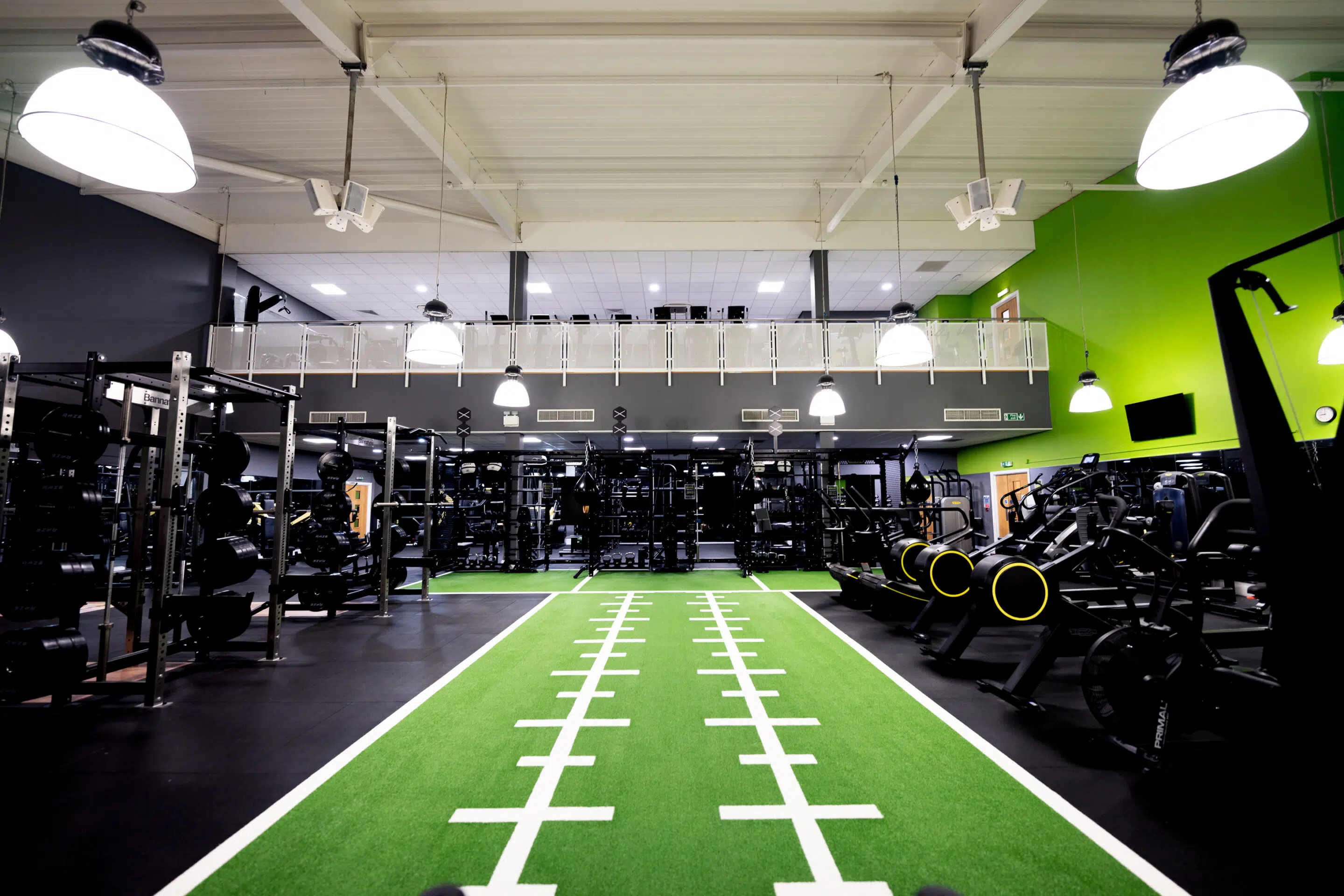
Two floors can look almost identical on the day they are installed. The real difference is how they perform after years of impact, footfall and daily use.
You have received several quotes for a new gym floor.
The products appear comparable. They share the same colour, a similar surface finish and perhaps even the same thickness. Yet one quote is significantly more expensive than another.
What accounts for the difference? Are you simply paying for a brand name?
Not necessarily.
On the day they are installed, two gym floors can be almost impossible to tell apart. The difference may only emerge later, in joints that begin to open, a surface that becomes increasingly difficult to clean or flooring that no longer performs as the original specification promised.
In commercial gym flooring, what you cannot see is often as important as what you can.
Material sourcing, manufacturing consistency, testing, installation and suitability for the training space can all influence the price of a floor. More importantly, they can influence its performance throughout its working life.
That is why price per square metre should be the beginning of the comparison, not the end of it.
Similar Specifications Do not Mean Similar Products
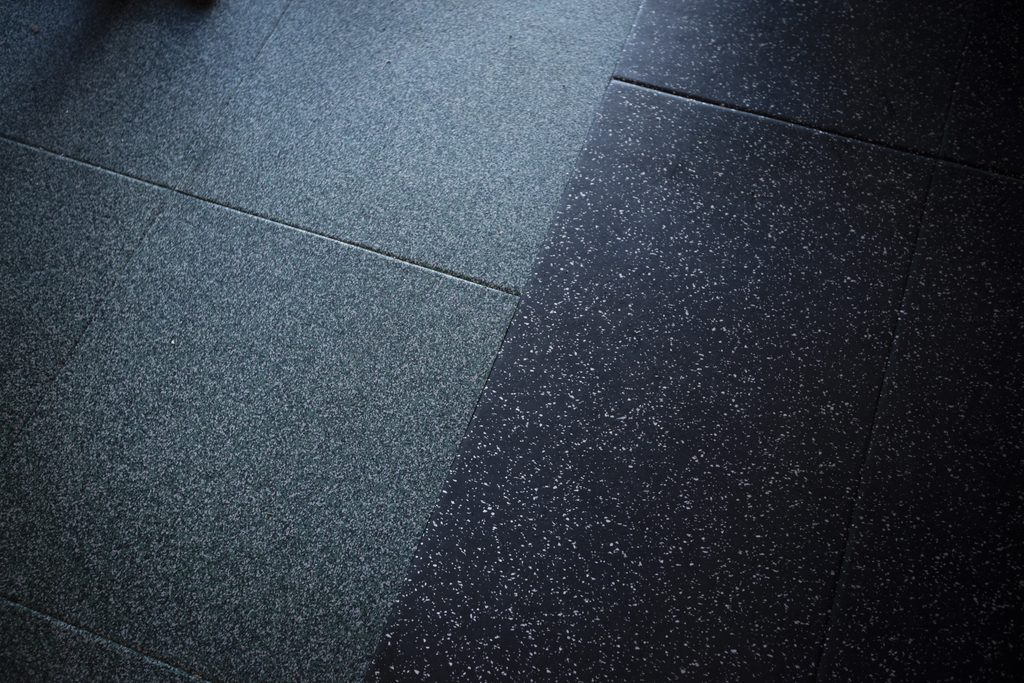
When comparing flooring quotes, it is natural to focus on the most visible specifications:
- thickness
- tile dimensions
- weight
- colour
- surface finish
These details matter, but they rarely tell the complete story.
As we explored in [Part One: What Is Rubber Gym Flooring Actually Made From?], recycled SBR, virgin SBR and EPDM all have legitimate roles within a training space. The differences between flooring products arise not simply from which material has been used, but from how carefully it has been sourced, formulated, processed and manufactured.
Two floors with similar headline specifications can differ considerably in density, material consistency, dimensional stability, surface quality and durability.
Those distinctions can be difficult to identify in a product photograph or a line on a quote. They become easier to see after years of dropped weights, heavy footfall, daily cleaning and repeated equipment movement.
The lowest initial cost does not always produce the lowest cost over the life of the facility.
Equally, a higher price is not evidence of better performance on its own. The value must be supported by the material, technical information, manufacturing process and suitability of the proposed floor.
Where Did the Material Come From?
Much of the world’s rubber gym flooring is manufactured using recycled material, particularly rubber recovered from end-of-life vehicle tyres.
When it is properly sourced and processed, recycled tyre rubber can make an excellent gym floor. It offers strong impact absorption, useful acoustic properties and good value, which is why it remains widely used throughout commercial strength and fitness spaces.
But “recycled rubber” is not a complete specification.
Vehicle tyres are technically complex products containing different rubber compounds, fillers, oils and additives. Once those tyres enter a recycling stream, the quality and consistency of the resulting flooring depend partly on the original feedstock and partly on the controls applied during processing and manufacture.
This does not mean recycled rubber flooring is inherently unsafe or inferior. It means material traceability, testing and responsible manufacturing matter.
Certain substances found in rubber, including some polycyclic aromatic hydrocarbons, are subject to restrictions and concentration limits in relevant applications. Buyers should therefore expect a responsible flooring manufacturer or supplier to provide appropriate technical information and evidence of applicable testing.
For an operator installing hundreds of square metres of flooring into an indoor or outdoor training space, knowing where the material originated and how it has been assessed is a reasonable expectation.
Five Questions to Ask Before Comparing Flooring Quotes
Before treating two gym flooring quotes as comparable, ask:
- Who manufactured the flooring?
Is the manufacturer established, identifiable and able to provide meaningful technical support? - What is the flooring made from?
Look beyond the description “rubber tile”. Is it recycled crumb, virgin rubber, EPDM or a layered construction? - Where did the raw material originate?
What level of control and traceability exists within the material supply chain? - What testing and technical documentation are available?
Can the proposed performance, composition and compliance claims be supported? - How will the flooring be installed?
Has the installation method been selected around the characteristics of the product, the subfloor and the wider environment?
If these questions can be answered clearly, you are in a much stronger position to compare proposals on evidence rather than assumptions.
Cheap does not automatically mean unsuitable, just as expensive does not automatically mean good. What matters is understanding precisely what you are receiving for the quoted price, and whether it is right for the training space.
Why We CHOSE DuraTRAIN and PaviFLEX
Manufacturers can differ considerably in their approach to raw materials, quality control, technical development and traceability.
This is why IndigoFitness is the exclusive UK distributor of DuraTRAIN and PaviFLEX. The two brands take different approaches to rubber flooring, but both give us the technical confidence to specify their products within demanding commercial training environments.
PaviFLEX manufactures high-performance rubber gym flooring in Spain, including compact flooring produced using virgin SBR.
Beginning with controlled raw materials allows the manufacturer to manage density, formulation, consistency and surface finish with a high degree of precision. This can create a smooth, homogeneous surface suited to areas where appearance, cleaning and consistency are particularly important.
PaviFLEX also recovers material generated within its own manufacturing processes and reuses it in appropriate products. Because this material remains within a controlled production stream, the manufacturer retains a clear understanding of its origin and composition.
DuraTRAIN takes a different route.
Its recycled rubber tiles are manufactured using material recovered from end-of-life truck tyres. This provides a durable raw material suited to the demands of strength and performance environments while giving an existing product a valuable second life.
The tiles are designed to deliver the impact protection and acoustic performance needed in demanding free-weight and strength areas. They can also form part of more advanced, multi-layer systems in which different sections of the floor perform distinct roles.
The important distinction is not simply virgin versus recycled.
It is the level of control behind the material, the consistency of manufacture and the confidence that the resulting floor is appropriate for its intended use. That is what we look for in the flooring brands we choose to represent.
Installation Is Part of the Specification
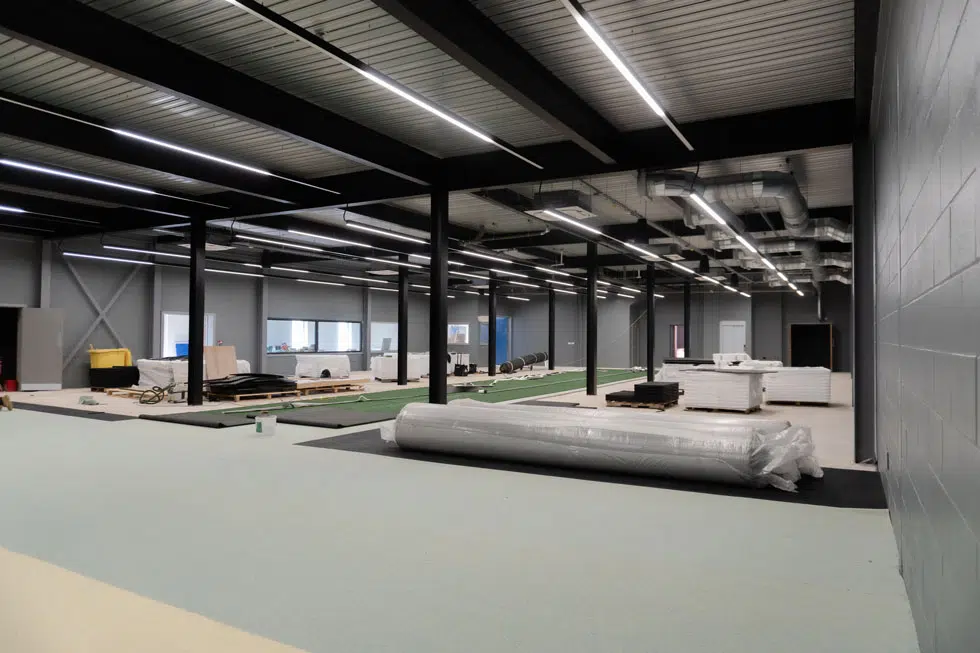
Even the right flooring product can underperform if it is installed incorrectly.
Rubber responds to temperature and environmental conditions. There are also dimensional tolerances inherent in its manufacture. Across a large commercial floor, seemingly small variations can become significant.
If those characteristics are not properly considered during installation, visible gaps can begin to develop between tiles or flooring sections. These gaps affect the appearance of the space and create places for dust, chalk and debris to collect.
The condition and construction of the subfloor matter too. A floor installed over solid concrete may require a different solution from one positioned above occupied rooms, over a raised access floor or onto a more acoustically sensitive structure.
This is why our flooring process considers the full build-up rather than treating the rubber surface as an isolated product.
For appropriate DuraTRAIN installations, we use a compression-fit method. Installing the tiles under controlled compression helps accommodate the natural characteristics of rubber while maintaining tighter joints throughout the floor.
The installation method should never be an afterthought. It is part of how the finished floor is expected to perform.
Look Beyond the Price per Square Metre
The cost of gym flooring is not only the price attached to the tile.
It includes the quality and traceability of the material, the consistency of its manufacture, the evidence supporting its performance and the expertise involved in specifying and installing it correctly.
It should also be considered over time.
How will the floor respond to repeated impact? Will it remain stable? How straightforward will it be to clean? Will it continue to support the visual standard of the facility? And what disruption or additional cost could arise if it needs to be repaired or replaced earlier than expected?
These questions are difficult to capture in a single price-per-square-metre figure, but they are central to the floor’s long-term value.
At IndigoFitness, premium flooring does not simply mean choosing the most expensive product. It means selecting materials from trusted manufacturing partners, applying them intelligently across the training space and using installation methods designed around long-term performance.
Because two gym floors can look almost identical on the day they are installed.
The real difference is what happens next.


